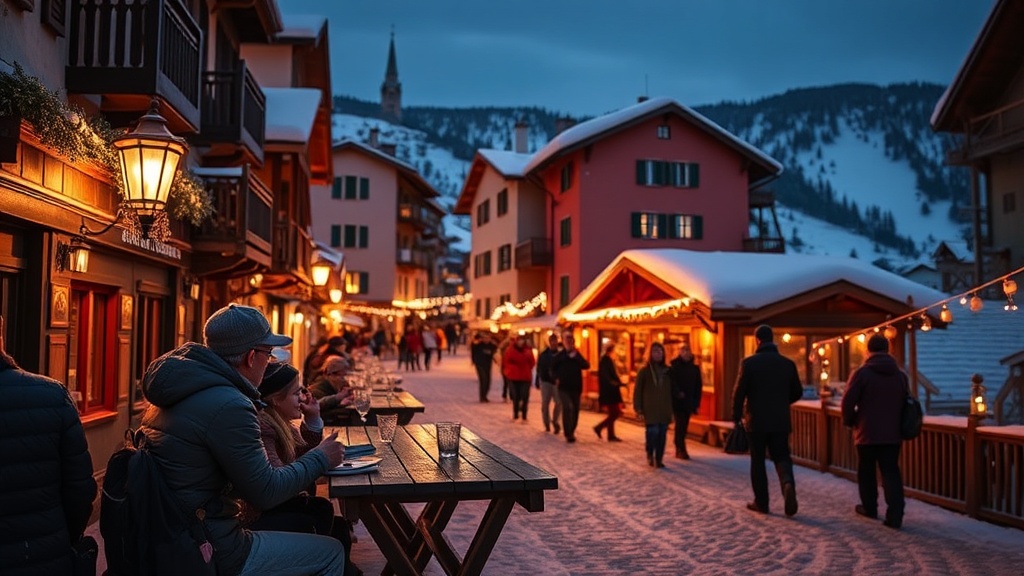
Navigating European Ski Villages and Local Apres Culture

Most travelers assume that a European ski trip is just a more expensive version of a North American trip, but that's a mistake. You aren't just paying for different snow; you're paying for a completely different social structure. This guide breaks down how to handle the logistics of European village life, the nuances of mountain-side social etiquette, and how to actually enjoy the local culture without feeling like a tourist.
The culture in the Alps is built around the transition from the slopes to the village. If you don't understand the rhythm of the day, you'll likely miss the best parts of your trip.
How Do European Ski Villages Differ from North American Resorts?
European ski villages are typically centered around pedestrian-only zones and historic town centers rather than sprawling, car-centric resort developments. While many US resorts feel like purpose-built shopping malls with mountains attached, European villages like Zermatt, Switzerland, or Chamonix, France, are actual towns with centuries of history. You'll often find yourself walking through cobblestone streets to get to a bakery or a pharmacy—not just a ski shop.
The layout matters for your planning. In many high-altitude villages, cars are restricted or even banned entirely. This means you'll be relying on foot traffic, much shorter shuttles, or even horse-drawn carriages. It's charming, but it's also a logistical hurdle if you're carrying heavy gear. If you're worried about the weight of your equipment, I highly recommend reading my post on smart packing strategies to keep your luggage manageable.
There's also a distinct difference in the "vibe" of the slopes. North American resorts often prioritize high-speed lifts and massive, wide-open runs. European skiing tends to favor much steeper, more technical terrain and much longer, more complex lift systems. You might spend more time on a single lift, but the descent is often more varied. It's a different kind of physical demand—one that requires a bit more stamina.
One thing to keep in mind is the "après-ski" culture. In the US, this often looks like a casual beer at a lodge near the base of the lift. In Europe, it's a full-scale social event. It's not just a drink; it's an identity.
What Is the Typical Apres-Ski Etiquette?
Apres-ski in Europe is a social ritual that often begins well before the lifts actually close. It's a loud, high-energy-filled transition from skiing to socializing, and there are a few unwritten rules to follow if you want to blend in.
First, don't be afraid of the noise. Whether you're in a crowded pub in St. Anton or a mountain-side bar in Val d'Isère, the atmosphere is meant to be boisterous. However, there is a line between "having fun" and "being the loud American tourist." Respect the local pace. If the locals are sipping a quiet glass of wine at 4:00 PM, don't be the person screaming for a shot of Tequila. (Though, let's be real, someone eventually will be.)
Here is a quick breakdown of the different styles of après-ski you'll encounter:
- The High-Energy Party: Found in places like Val Thorens. Expect DJs, loud music, and people dancing on chairs.
- The Traditional Alpine: Common in Austrian villages. Think heavy wooden tables, local beers, and perhaps some accordion music.
- The Sophisticated Lounge: Common in high-end resorts like Courchevel. It's more about high-end champagne and quiet conversation in a luxury setting.
It's also worth noting the gear transition. While you might see people skiing in their gear at a bar in the US, in Europe, there is a much stronger emphasis on changing into "mountain casual" attire. You don't need a tuxedo, but a clean sweater and decent trousers will make you feel much more comfortable in the nicer village restaurants. You'll want to be comfortable, but you don't want to look like you just fell down a mountain.
How Much Does a Ski Trip in Europe Cost?
The cost of a European ski trip varies wildly depending on whether you choose a budget-friendly village in Bulgaria or a luxury resort in the French Alps. Unlike the US, where you often pay for a lift pass and then everything else is an add-on, European pricing can be more integrated, but the "hidden" costs of dining and drinking can add up quickly.
To give you an idea of what to expect, I've put together a rough comparison of daily spending for a mid-range traveler. This doesn't include your flights, obviously, but it covers the ground-level expenses.
| Expense Type | Budget (Eastern Europe/Bulgaria) | Mid-Range (Austria/France) | Luxury (Switzerland/High-End France) |
|---|---|---|---|
| Daily Lift Pass | €45 - €60 | €60 - €85 | €90+ |
| Lunch on Mountain | €15 - €25 | €25 - €45 | €50+ |
| Dinner & Drinks | €30 - €50 | €50 - €90 | €120+ |
| Accommodation (per night) | €50 - €100 | €150 - €300 | €500+ |
Keep in mind that Switzerland will almost always be at the top end of these estimates. If you're looking at the Swiss Alps, be prepared for higher prices for even the simplest coffee. On the other hand, skiing in Bulgaria is incredibly affordable if you're looking to save money. It's a trade-off between the level of luxury and the sheer scale of the mountain-side infrastructure.
One thing to watch out for is the "mountain tax." Many resorts have recently implemented environmental fees or "resort taxes" to fund local infrastructure. These are often small, but they are mandatory. Don't be surprised when a few extra Euros are tacked onto your hotel bill at the end of the week.
How Do I Plan My Daily Schedule for Maximum Fun?
The best way to plan your day is to work backward from the local "golden hour"—that time right before the lifts close when the sun hits the slopes and the après-ski bars start to heat up. If you try to ski until the very last second, you might miss the best social opportunities.
A typical successful day looks like this:
- Morning: A hearty, local breakfast (think pastries and coffee) and a quick check of the weather.
- Mid-Day: A long lunch at a mid-mountain restaurant. Don't rush back to the slopes; stay and enjoy the view.
- Afternoon: High-intensity skiing while the snow is still fresh, followed by a descent toward the village around 3:30 PM.
- Late Afternoon: The "Social Peak." This is when you find your spot for après-ski.
- Evening: A seated, multi-course dinner. In Europe, dinner is an event, not a quick bite before bed.
If you're traveling with a group, coordination is key. It's easy to get separated in a crowded village or on a busy lift. I've found that setting a specific "meeting spot" at a recognizable landmark—like a specific fountain or a certain shop—is a lifesaver. Also, don't forget to check the local weather reports frequently. The weather in the Alps can change in a heartbeat, and a sunny morning can turn into a whiteout by 2:00 PM.
Lastly, don't feel pressured to do everything. If the group wants to hit the steep terrain and you'd rather enjoy a long lunch in the sun, do it. The beauty of these villages is that there is always something happening, whether it's a high-octane party or a quiet moment in a mountain chalet. Just make sure you're participating in the version of the trip that actually sounds fun to you.